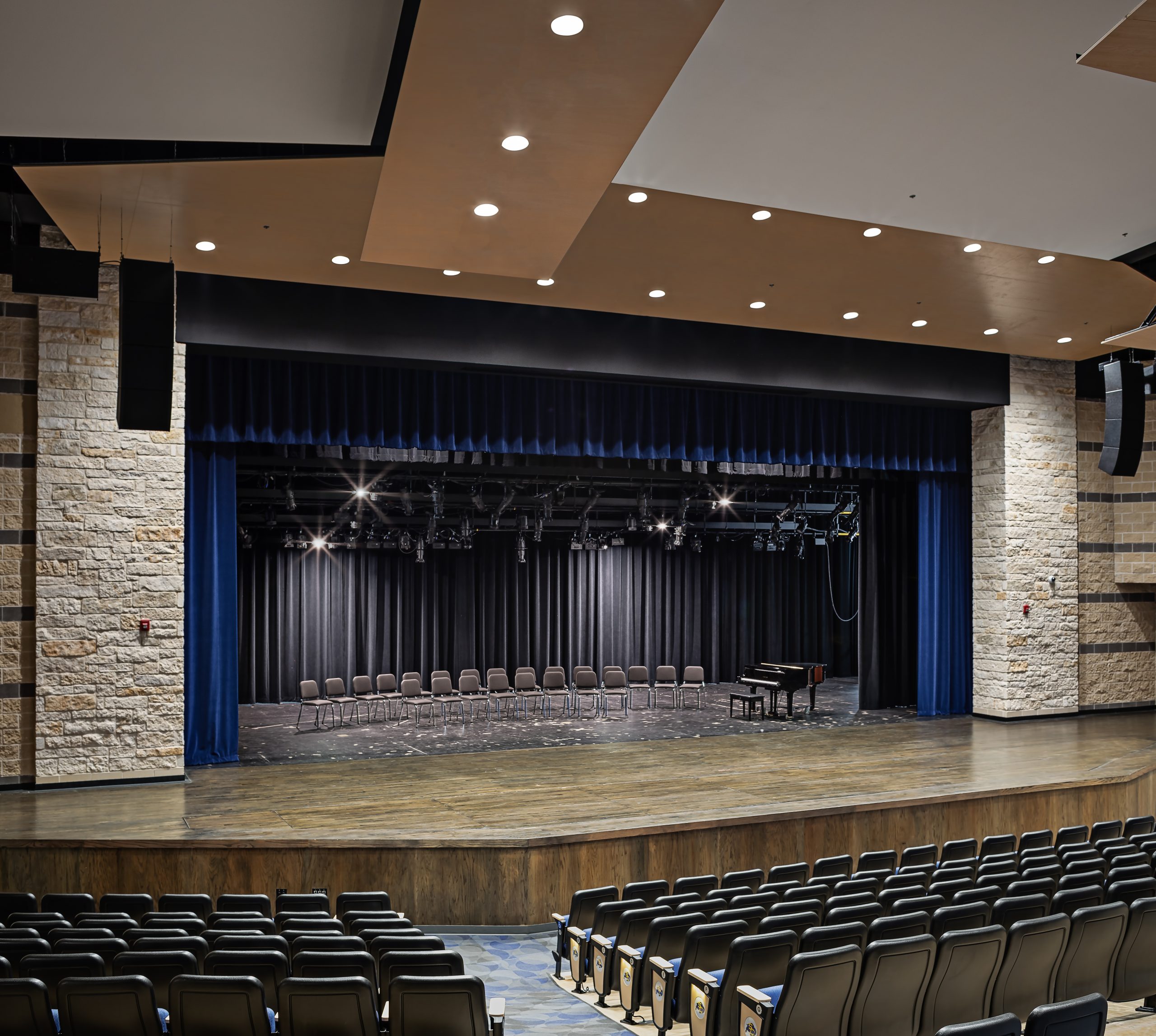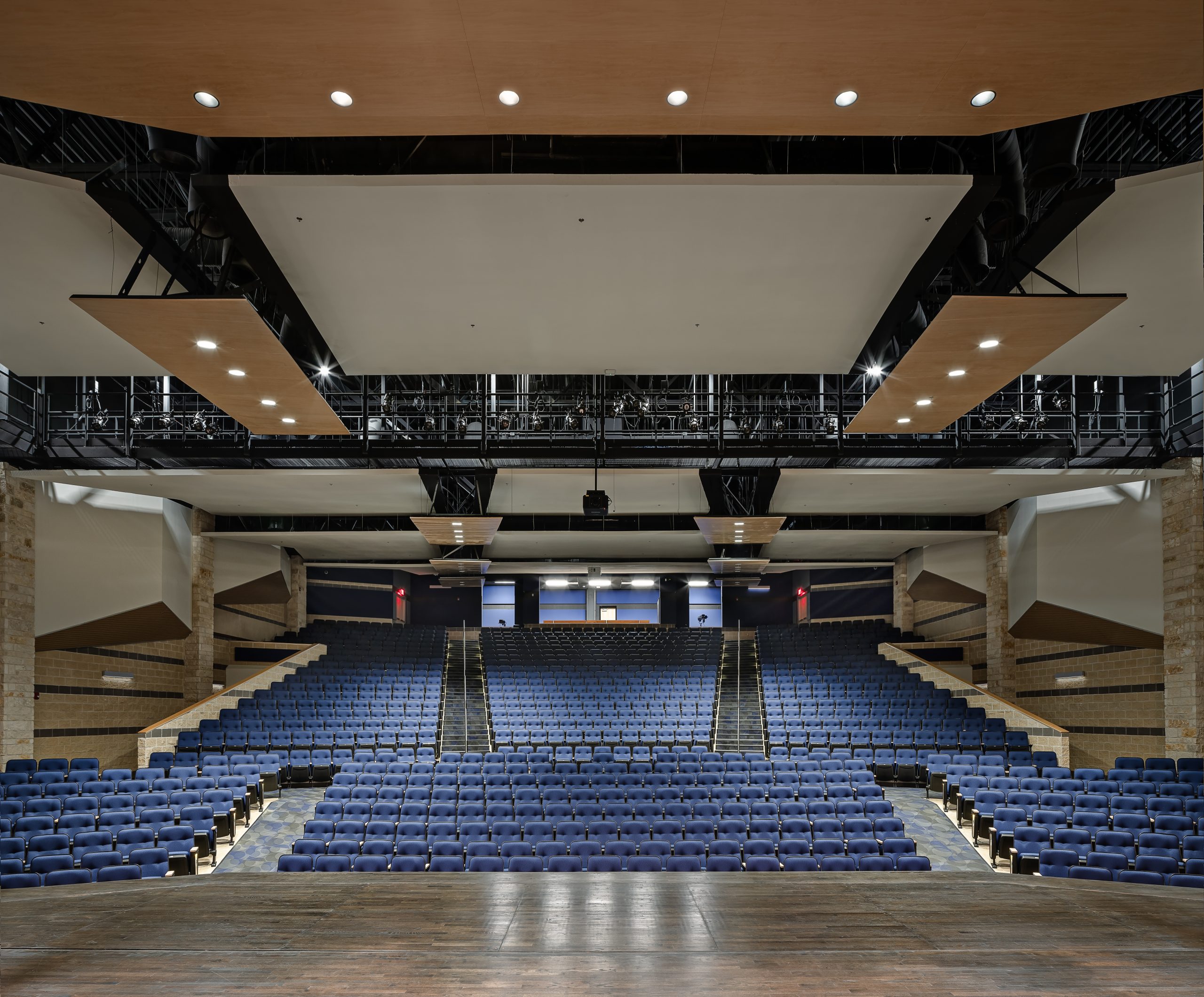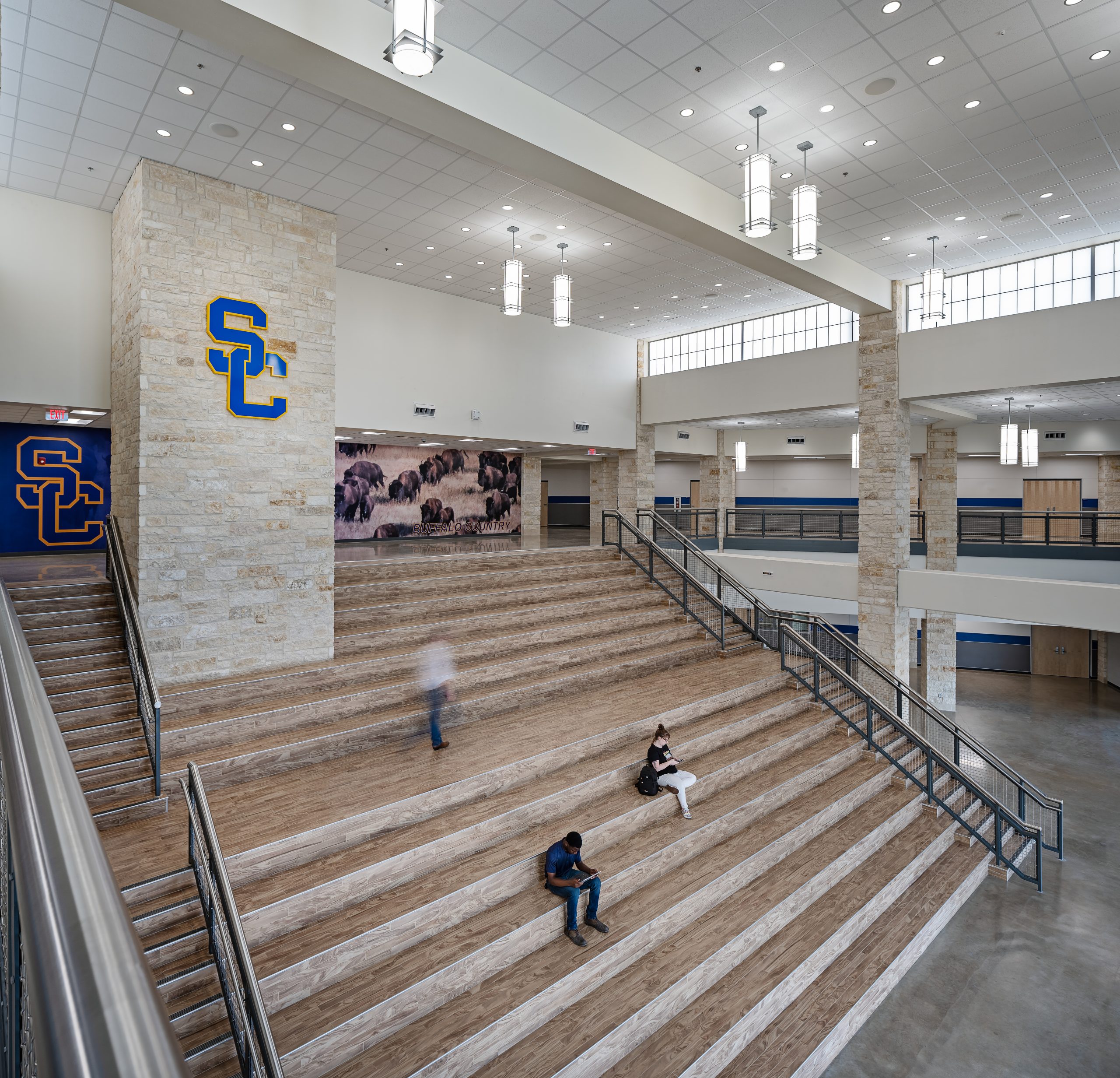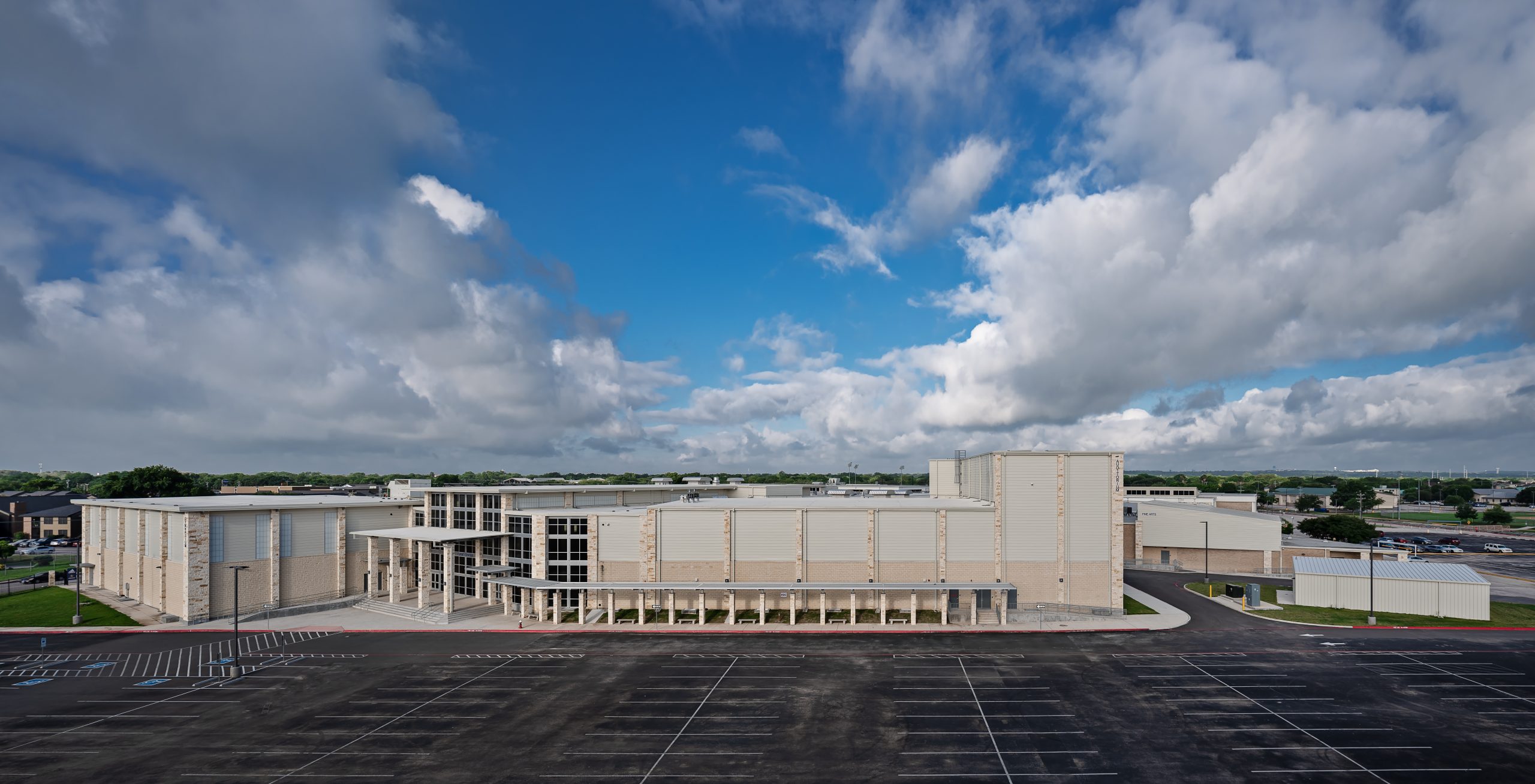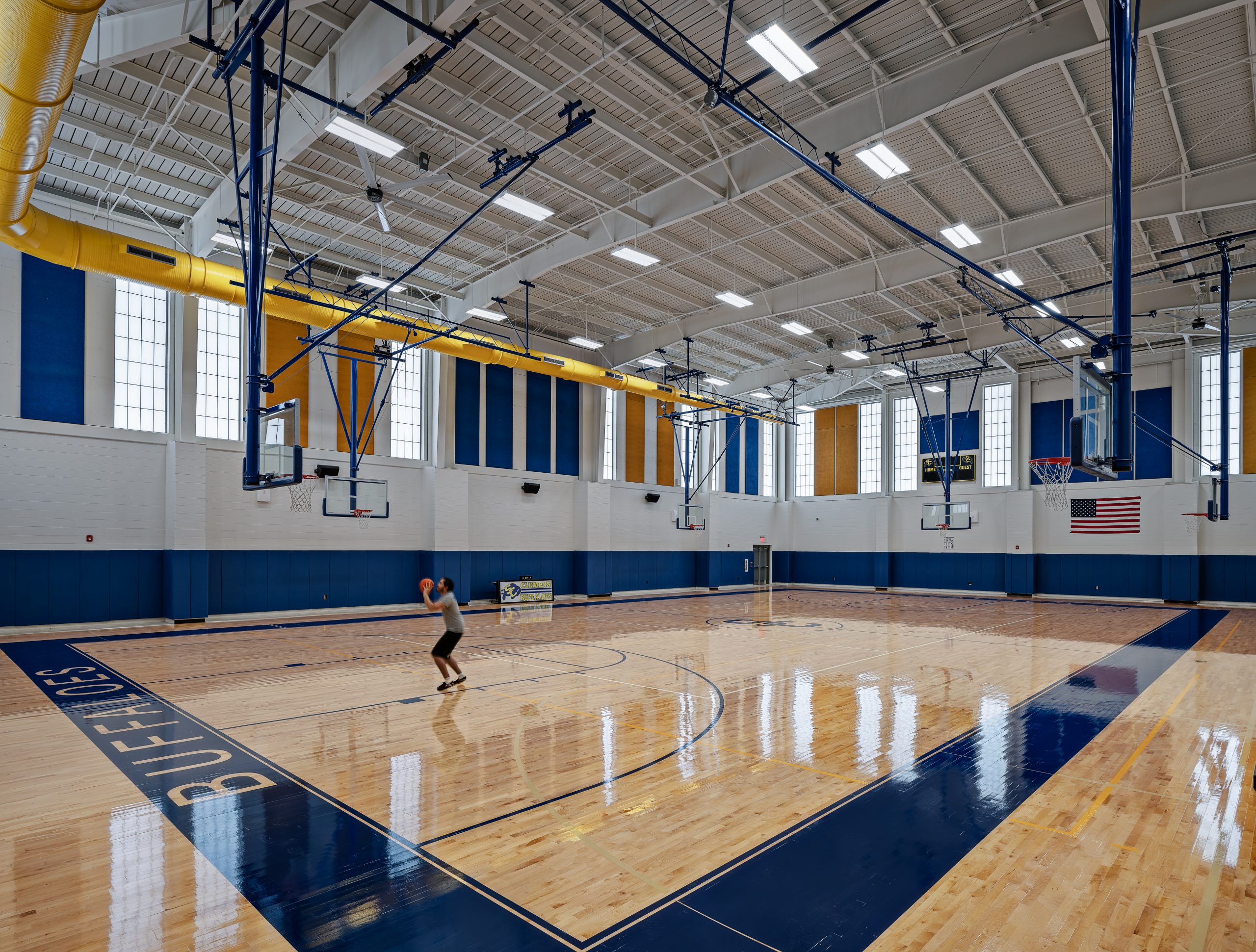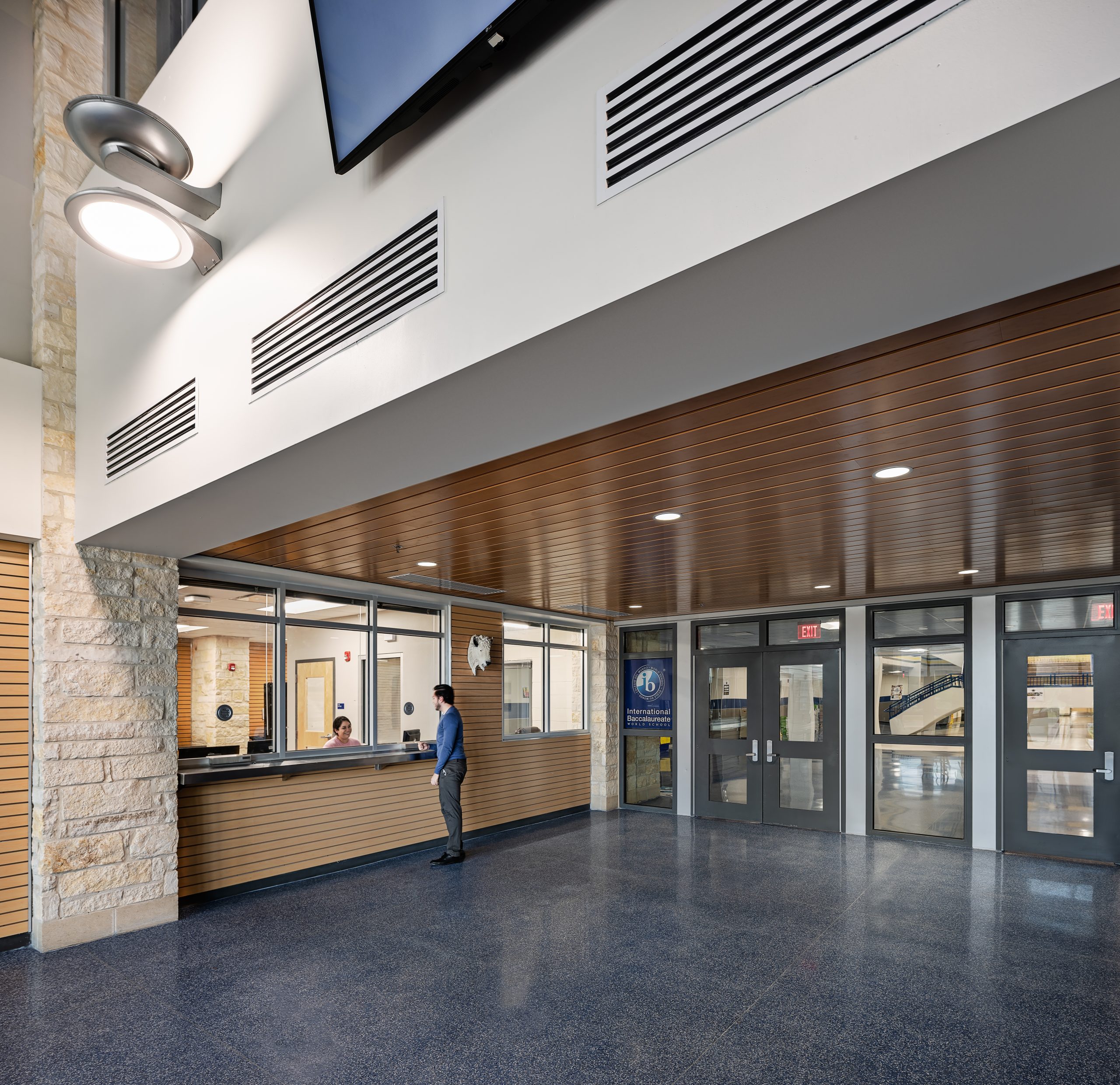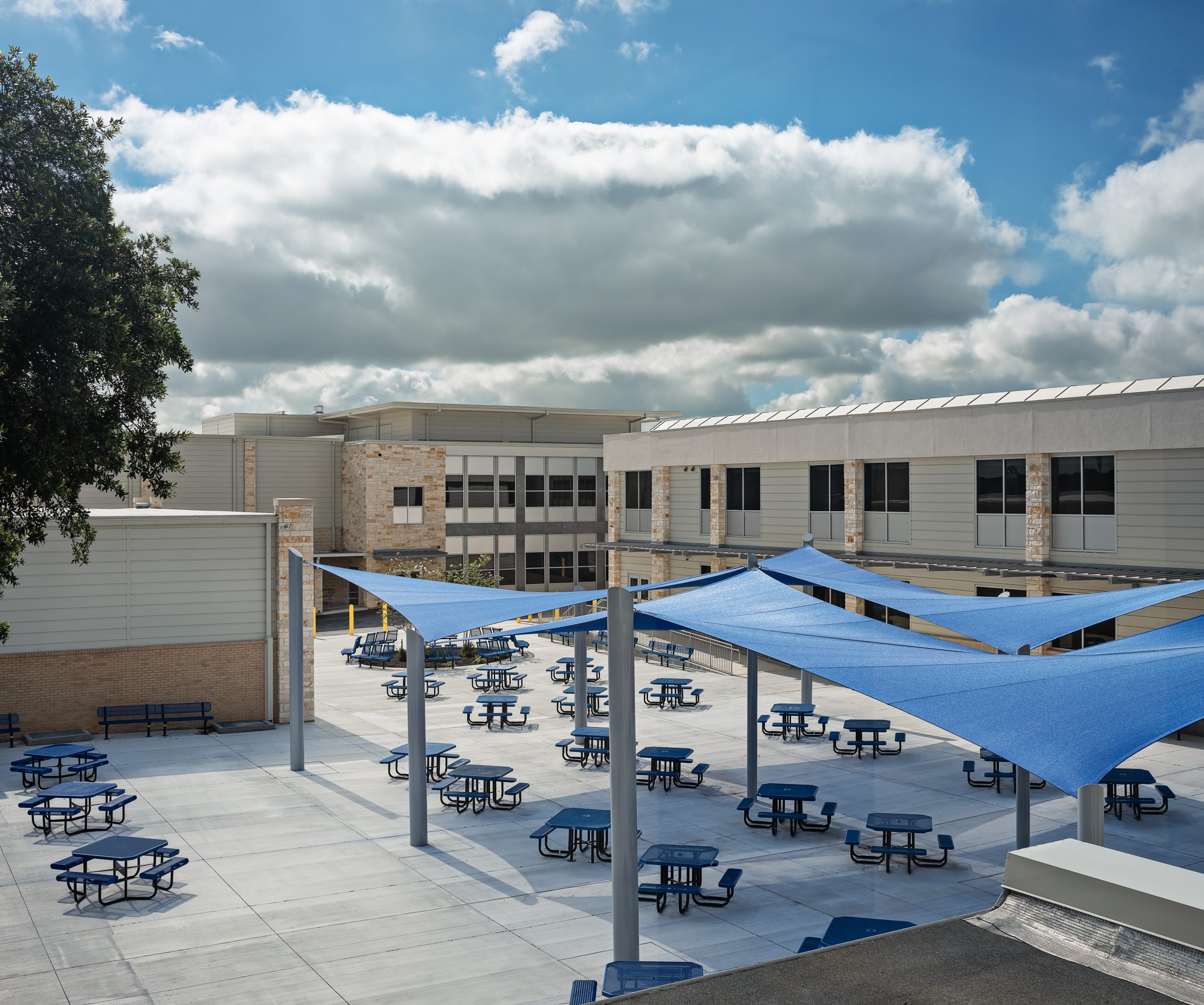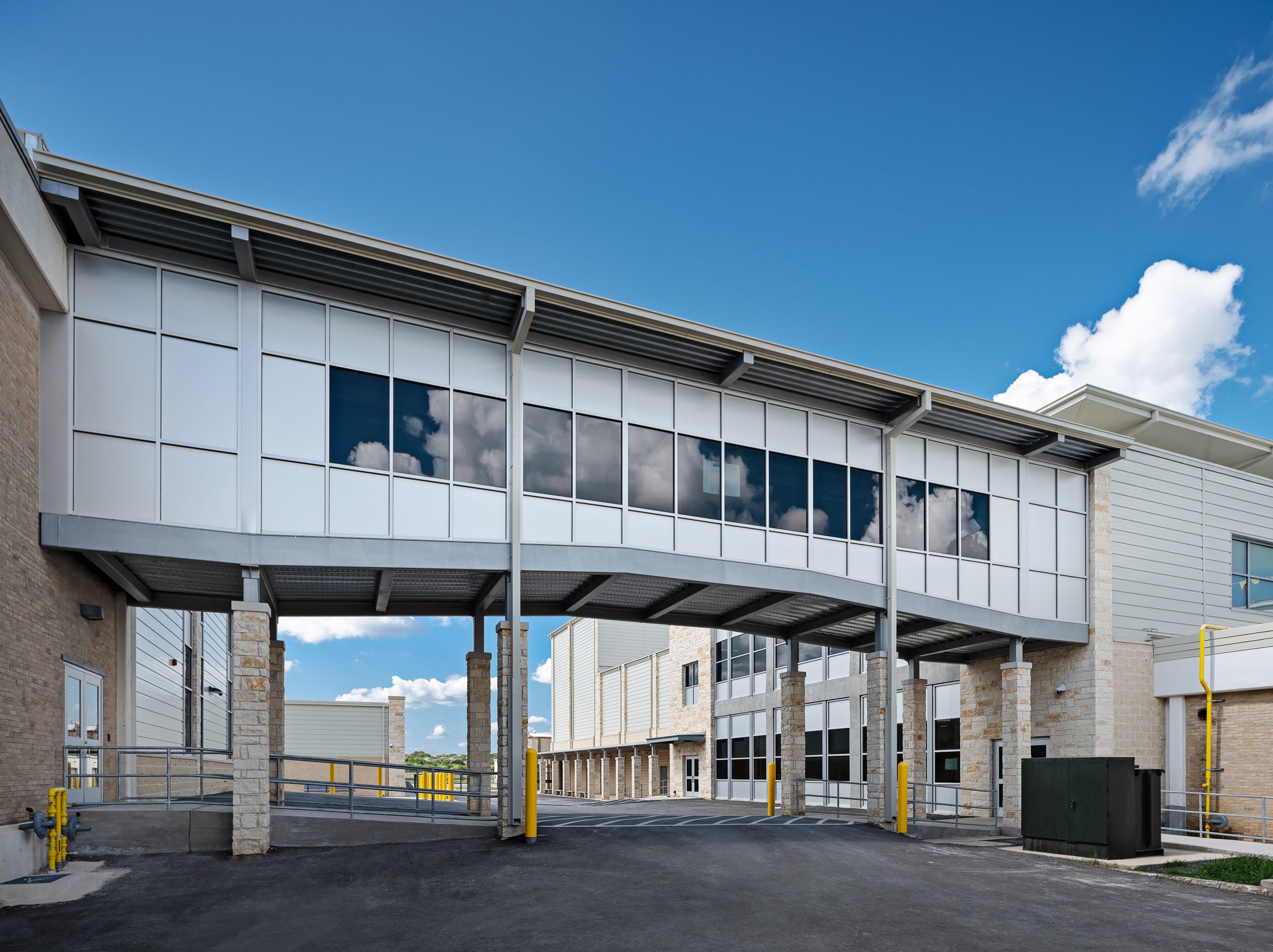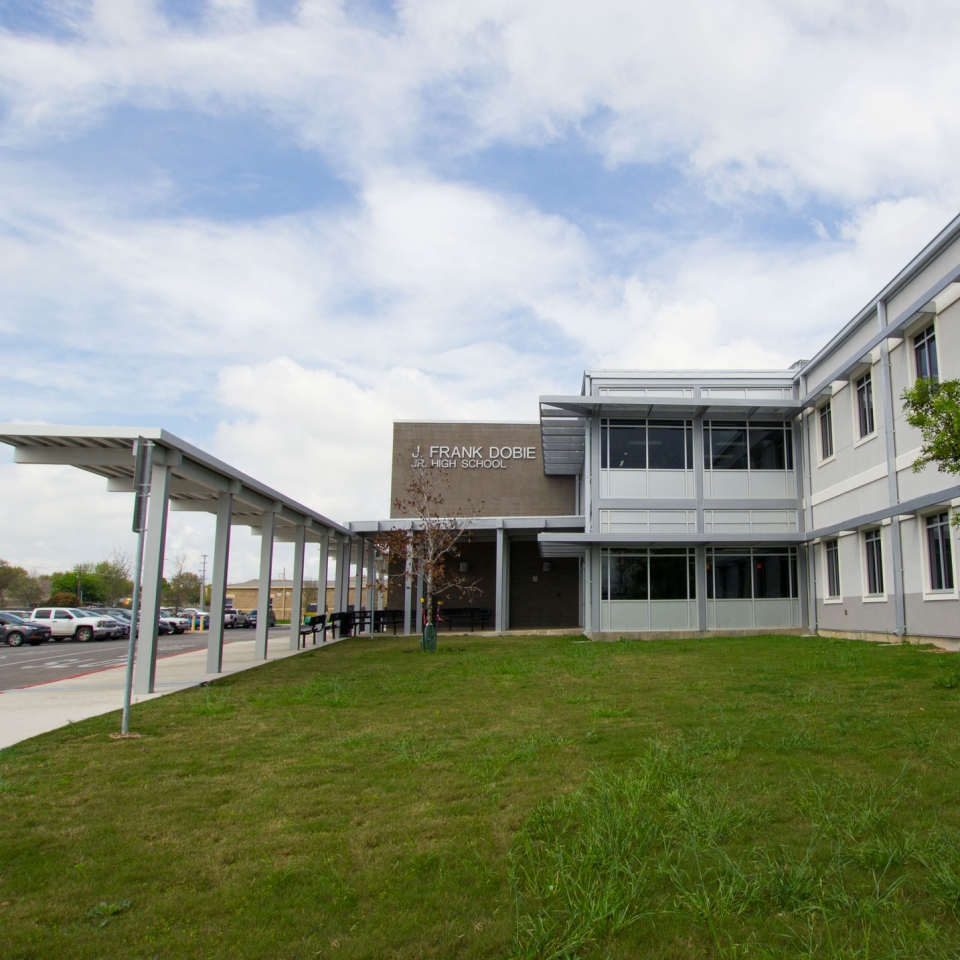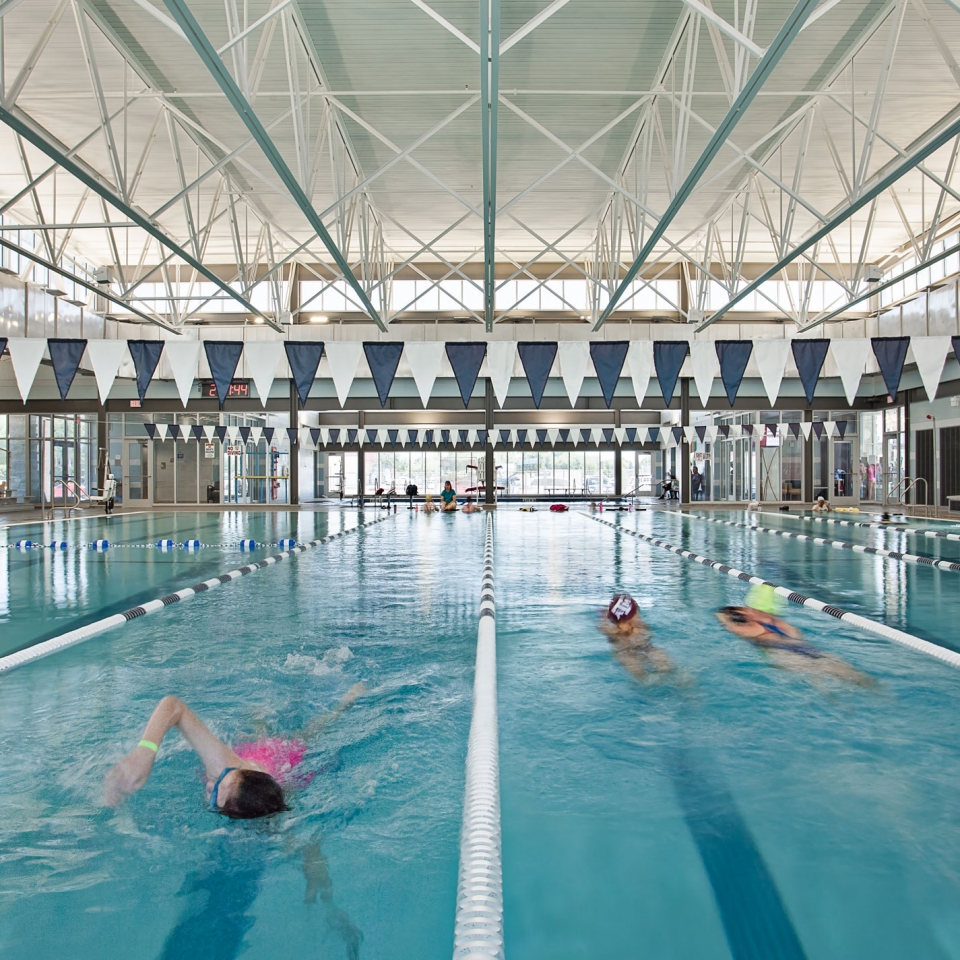

Samuel Clemens High School was a multi-year effort on an active campus, which called for thoughtful, strategic planning. Construction required phased scheduling and strict safety measures to protect students and staff while minimizing disruption. Limited site access complicated material deliveries and emergency routes. Integrating large-scale additions including an auditorium, gym, and administration areas into the existing two-story structure demanded advanced engineering solutions. Acoustic design for the 66,183 SF auditorium had to mitigate jet noise from a nearby Air Force Base, and all work needed to stay within budget and schedule constraints.
Critical issues such as safety were addressed through phased scheduling, temporary fencing, and traffic coordination. Structural integration challenges were solved by using expansion joints and reinforced tie-ins to connect new additions to existing buildings. Technology upgrades were completed during off-hours to protect critical systems, and specialized Career & Technical Education spaces were designed with faculty and industry input to meet industry standards. Acoustic issues in the auditorium were resolved through advanced engineering and vibration-dampening floors for performance spaces.
Strategic planning and collaboration guided every phase. Marmon Mok implemented several problem-solving strategies, including a phased schedule that separated learning areas from construction zones to effectively minimize disruptions. Building Information Modeling (BIM) was leveraged for real-time clash detection, ensuring seamless integration of new additions with existing structures and reducing costly rework. Regular stakeholder meetings aligned design concepts like Remote Media spaces and CTE labs with District goals. Value engineering-controlled costs while maintaining quality and functionality.
BIM played a pivotal role in fostering innovation and teamwork. It provided a unified 3D model for integrating major additions including the auditorium, gym, and CTE shop with the existing structure, ensuring consistent elevations and tie-ins. Beyond technical coordination, BIM offered clear visualization for stakeholders, enabling informed decisions on layout and technology integration. Collaborative strategies such as early design workshops and transparent communication strengthened team alignment and delivered a modern, future-ready campus that meets Districts educational goals and community expectations.
Auditorium
Addition
Gymnasium
Shop Building
Administrative Offices
Locker Rooms
Choir Studio
Dance Studio
Technology
Restrooms
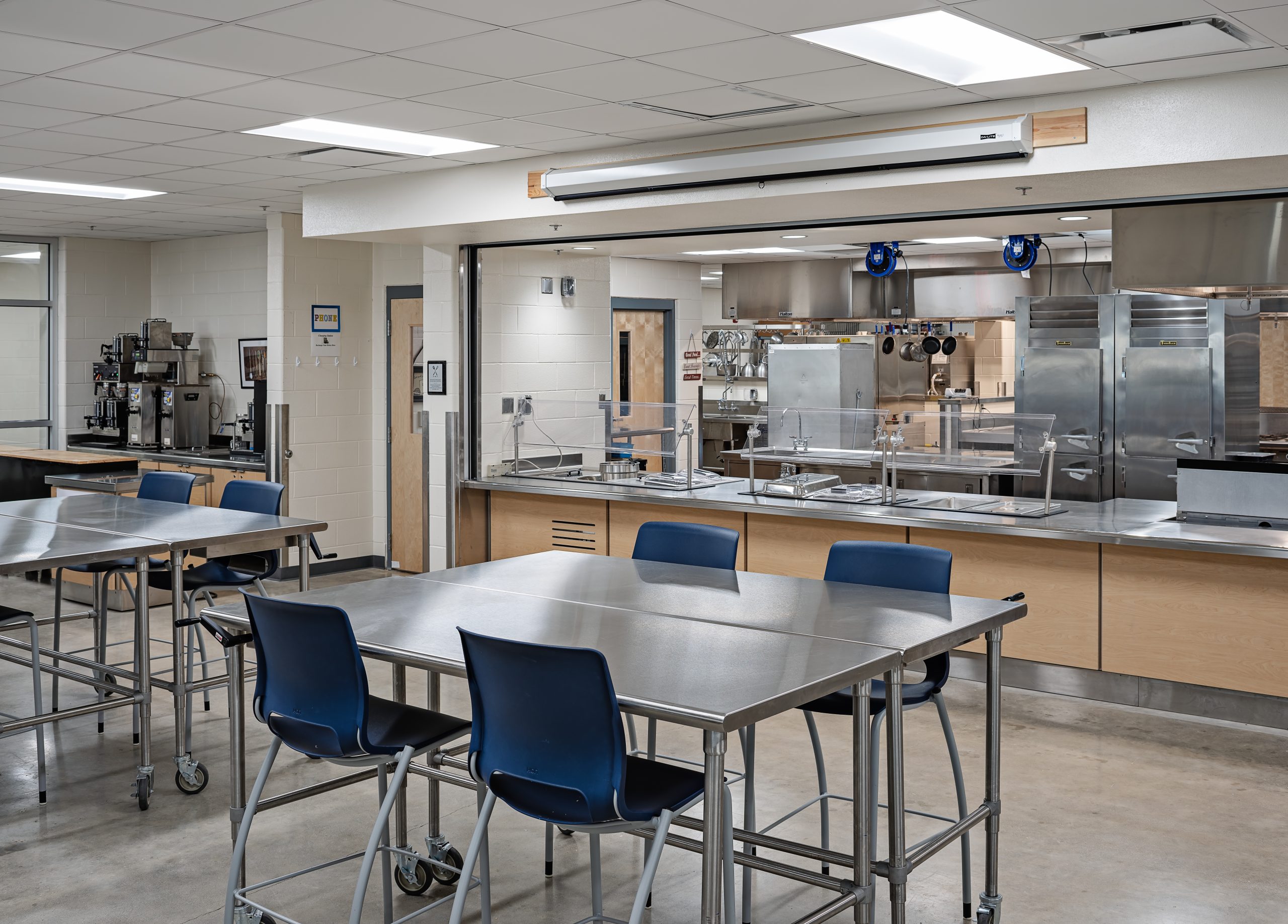
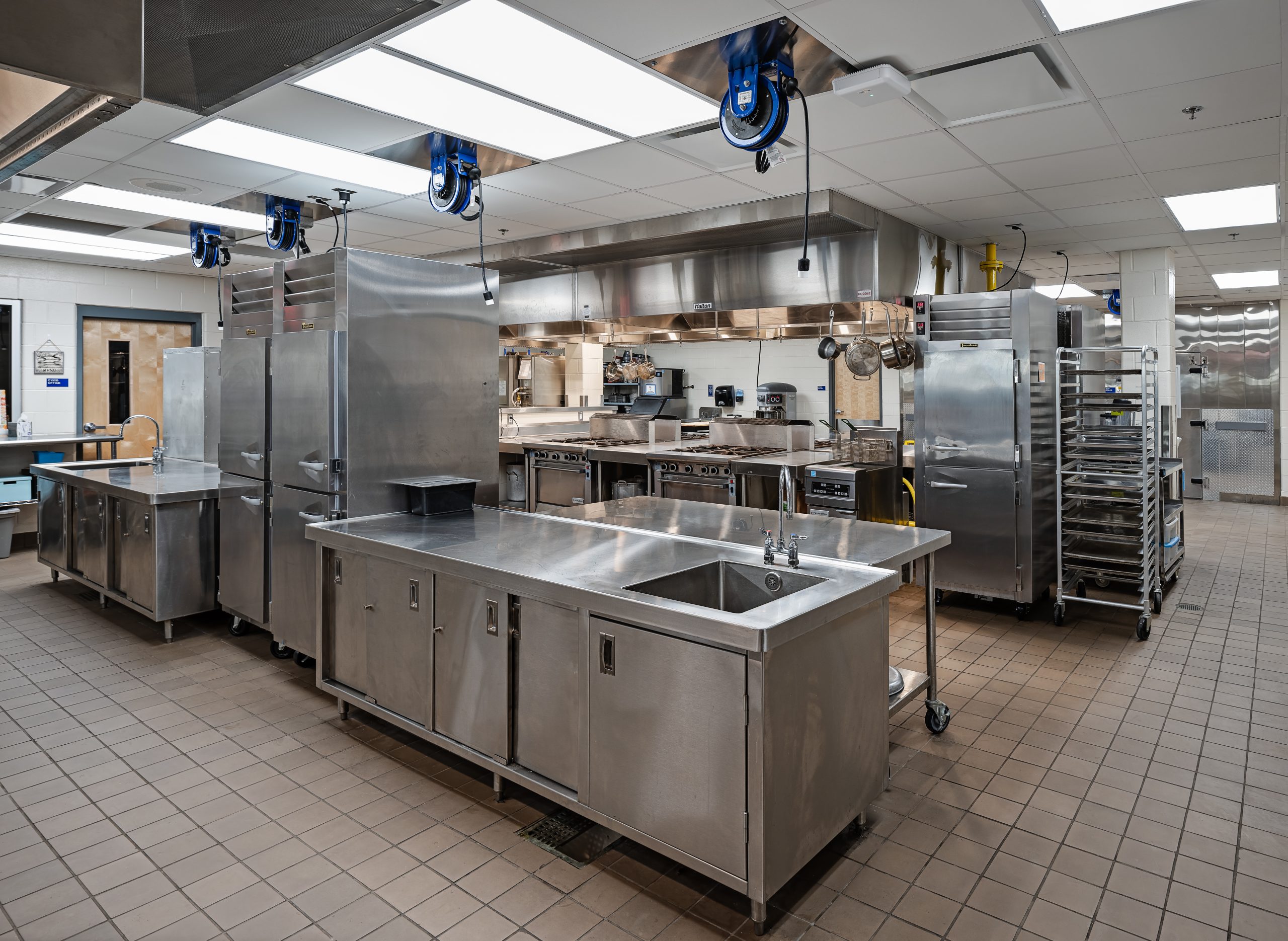
Culinary Arts
Forensics
Healthcare